Converting to Judaism is about far more than passing a Beit Din interview — it's about building a Jewish life from the inside out, starting with your home. One of the most visible and meaningful ways to do that is through the physical objects that mark a Jewish living space: the mezuzah on your doorpost, the Shabbat candlesticks on your table, the kiddush cup in your cabinet. For conversion candidates, learning what these objects are, why they matter, and how to use them correctly is an essential part of the journey. This guide walks you through the most important Jewish home symbols, explains their religious and cultural significance, and gives you practical advice on how to bring them into your own space — even before your conversion is complete.
📌 Key Takeaways
- The mezuzah is the most foundational Jewish home symbol, required on doorposts by Torah law
- Several sacred objects — candlesticks, kiddush cup, challah board — are tied to weekly Shabbat practice
- Conversion candidates are encouraged to begin using these objects as part of active Jewish living
- The Hebrew words and blessings associated with each object are worth memorizing early in your studies
Why Your Home Environment Matters During Conversion
Rabbis and Beit Din panels pay close attention to whether a conversion candidate is truly "living Jewishly." That phrase sounds vague, but it has concrete dimensions. One of them is your home environment.
When your sponsoring rabbi visits your home — which many do — or when the Beit Din asks you about your daily practice, having a mezuzah on your door and Shabbat objects on your shelf sends a clear, honest signal. More importantly, surrounding yourself with these objects reinforces your learning and helps Judaism feel real, not just theoretical.
This isn't about performance or decoration. Each object in a traditional Jewish home carries a mitzvah (commandment), a blessing, or a historical memory. Understanding that context transforms them from religious tchotchkes into living connections to 3,000 years of Jewish civilization.
If you're still early in your studies, you might also want to read our guide to Jewish prayer basics, since several home rituals involve short blessings you'll want to know by heart.
The Mezuzah: First Object, First Mitzvah
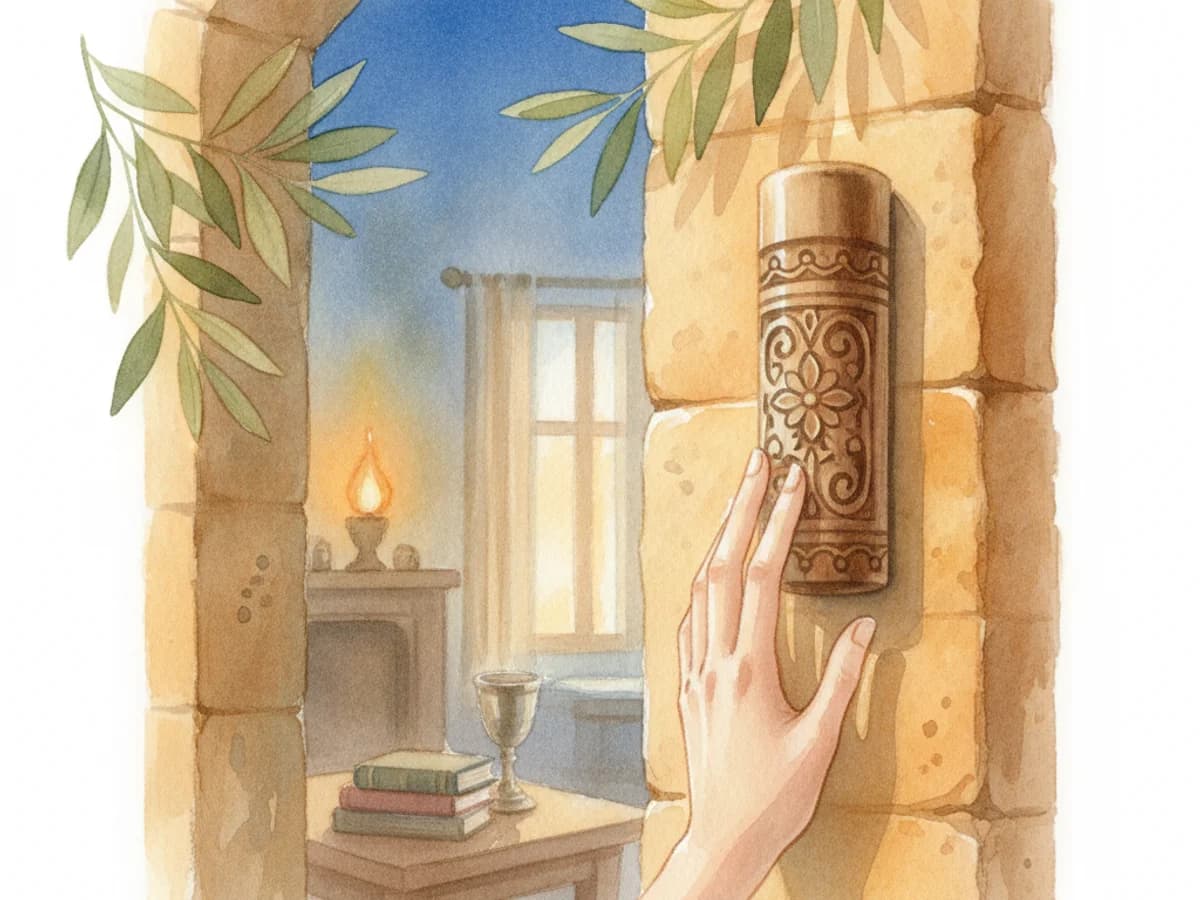
The mezuzah is the single most recognizable marker of a Jewish home. The word means "doorpost" in Hebrew, and the mitzvah — derived from Deuteronomy 6:9 — commands Jews to write God's words "on the doorposts of your house and on your gates."
In practice, a mezuzah consists of 2 parts:
- A handwritten parchment scroll (klaf) containing the Shema and the V'ahavta (Deuteronomy 6:4-9 and 11:13-21)
- A decorative case that protects the scroll and is affixed to the doorpost
Which Doorways Need a Mezuzah?
According to halacha (Jewish law), a mezuzah is required on every doorway in the home that leads to a habitable room — meaning a room used for living, sleeping, or working. Bathrooms do not require one. The front door always takes priority.
The mezuzah is placed on the right side of the doorframe as you enter the room, tilted at a slight diagonal (Ashkenazi tradition) or vertically (Sephardic tradition). It is affixed at the lower third of the upper third of the doorpost — roughly shoulder height.
💡 Good to know
When purchasing a mezuzah, always buy a kosher klaf (scroll) from a certified sofer (scribe) or a reputable Judaica store. A decorative case without a proper scroll inside does not fulfill the mitzvah. Expect to pay between $20–$60 for a reliable kosher scroll.
The blessing recited when affixing a mezuzah is: Baruch Atah Adonai, Eloheinu Melech haolam, asher kid'shanu b'mitzvotav v'tzivanu likboa mezuzah. — "Blessed are You, Lord our God, Ruler of the universe, who has sanctified us with His commandments and commanded us to affix a mezuzah."
Shabbat Objects: The Weekly Ritual Set
Shabbat is the heartbeat of Jewish home life, observed every week from Friday at sundown to Saturday night. A full Shabbat practice requires several specific objects. If you haven't yet read our complete Shabbat guide for conversion candidates, it's an excellent companion to this section.
Shabbat Candlesticks
Two candles are lit at least 18 minutes before sundown on Friday evening, traditionally by the woman of the household (though anyone may do it). The candlesticks themselves have no fixed form — they can be silver heirlooms or simple glass holders — but the minimum is 2 candles.
The blessing is recited after lighting, with hands waved over the flames and eyes covered: L'hadlik ner shel Shabbat. This moment is considered one of the most spiritually significant of the Jewish week.
The Kiddush Cup
Kiddush — the sanctification of Shabbat over wine — is performed Friday night and again on Shabbat morning. The kiddush cup should hold at least a revi'it of liquid (approximately 86 ml or 3 oz). Silver cups are traditional, but any cup can be used. Grape juice is an acceptable substitute for wine.
The Challah Board and Cover
Two loaves of challah (braided bread) sit on the Shabbat table, covered with a decorative cloth until after kiddush is recited. The cover recalls the manna in the desert, which was covered by dew above and below. A wooden or marble challah board keeps crumbs contained and adds to the beauty of the table setting.
A Comparison of Essential Jewish Home Objects
| Object | Purpose | Required By | Approximate Cost | Blessing Required? |
|---|---|---|---|---|
| Mezuzah | Mark doorposts; fulfill Torah commandment | Torah (Deut. 6:9) | $25–$80 per door | Yes |
| Shabbat Candlesticks | Usher in Shabbat with light | Rabbinic tradition | $15–$150+ | Yes |
| Kiddush Cup | Sanctify Shabbat and holidays over wine | Rabbinic tradition | $20–$200+ | Yes (kiddush) |
| Challah Cover | Cover bread during kiddush | Custom (minhag) | $10–$50 | No |
| Havdalah Set | Mark end of Shabbat with candle, spices, wine | Rabbinic tradition | $30–$120 | Yes (havdalah) |
| Hanukkah Menorah (Chanukiah) | Publicize the miracle of Hanukkah | Rabbinic tradition | $20–$100+ | Yes |
The Havdalah Set: Closing Shabbat with Ceremony
Havdalah — meaning "separation" — is the ritual that ends Shabbat on Saturday night, once 3 stars are visible in the sky. The ceremony uses 3 objects:
- A braided candle with multiple wicks (representing the intertwining of sacred and ordinary time)
- A spice box (b'samim) filled with fragrant spices like cloves or cinnamon, to comfort the soul as Shabbat departs
- A kiddush cup filled with wine or grape juice
The Havdalah blessings are recited over each element in order. Many conversion candidates find Havdalah one of the most emotionally moving rituals in the Jewish year — its sensory richness makes it memorable even for beginners.
Other Sacred Objects Worth Knowing
Beyond the weekly Shabbat set, several other objects appear in Jewish homes across the year.
The Hanukkah Menorah (Chanukiah)
A chanukiah holds 9 candles — 8 for the 8 nights of Hanukkah, plus the shamash (helper candle) used to light the others. It is traditionally placed in a window or doorway to publicize the miracle. The mitzvah of pirsumei nisa — publicizing the miracle — is central to why placement matters.
The Seder Plate (Ke'arah)
Used once a year at the Passover Seder, the seder plate holds 6 symbolic foods: maror (bitter herbs), karpas (vegetable), charoset (nut-fruit paste), zeroa (shankbone), beitzah (roasted egg), and chazeret (romaine lettuce). Each element represents an aspect of the Exodus from Egypt.
Torah-Related Items
Many Jewish homes keep a siddur (prayer book) and a chumash (Five Books of Moses) accessible for daily or weekly use. Some homes also display a hamsa (a palm-shaped amulet) or artwork featuring Hebrew text, though these are cultural rather than halachic requirements.
⚠️ Warning
Not all Jewish objects sold in gift shops are halachically valid. For mezuzah scrolls, kiddush cups, and tallitot, always purchase from a reputable Judaica source or ask your rabbi for a recommendation. An invalid mezuzah, for example, does not fulfill the mitzvah even if it looks authentic.
Building Your Jewish Home Gradually
You don't need to purchase everything at once. Most rabbis recommend starting with the mezuzah on your front door — it's the first mitzvah and the most visible. Then build toward a complete Shabbat table setup: candlesticks, kiddush cup, challah cover.
A practical acquisition timeline might look like this:
- Month 1–2: Mezuzah for front door
- Month 3–4: Shabbat candlesticks and kiddush cup
- Month 5–6: Challah board and cover, Havdalah set
- Before your first Hanukkah: Chanukiah
- Before your first Passover: Seder plate
Each object you bring home is an act of intention — a statement that you are building a Jewish life, not just studying for a test.
Frequently Asked Questions
Can I put up a mezuzah before my conversion is complete?
Yes. Many rabbis actively encourage conversion candidates to affix a mezuzah during the study period. It is considered a meaningful expression of commitment and helps you feel connected to your future Jewish home. Some rabbis will help you do this during a home visit.
Does the denomination affect which objects I need?
The core set — mezuzah, Shabbat candlesticks, kiddush cup — is standard across Orthodox, Conservative, and Reform practice. The level of detail and strictness around kashrut-related items varies. Ask your sponsoring rabbi for denomination-specific guidance.
Where should I buy kosher mezuzah scrolls?
Reputable options include certified Judaica stores, synagogue gift shops, and organizations like Chabad.org or reputable Israeli online vendors. A kosher klaf is handwritten by a trained sofer and typically comes with a certificate of authenticity.
Can a non-Jewish partner use these objects?
There is no prohibition against a non-Jewish partner participating in home rituals. In fact, shared practice can be one of the most effective ways to build a Jewish home life together. See our guide on converting to Judaism while married to a non-Jewish spouse for more on navigating this dynamic.
What is the most important object to have before the Beit Din?
A mezuzah on your front door is widely considered the most symbolically significant item to have in place before your Beit Din. It is a direct Torah commandment and demonstrates that you have taken concrete steps to establish a Jewish home.
Conclusion
Creating a Jewish home is one of the most tangible and joyful aspects of the conversion journey. Each object — from the mezuzah on your doorpost to the challah cover on your Shabbat table — connects you to a living tradition shared by Jewish families across centuries and continents. Start with the essentials, learn the blessings, and let your home become a reflection of the Jewish identity you are building.
Ready to deepen your preparation? Join Judaism's study platform offers structured lessons on Jewish home practice, blessings, and everything you need to walk into your Beit Din with genuine confidence.