Of all the weekly moments in Jewish life, none is more central than Shabbat. The Talmud famously says that Shabbat is "one-sixtieth of the World to Come" — a foretaste of the messianic era, built into the fabric of every week. For conversion candidates, Shabbat is both a major area of study and a transformative lived experience. This guide covers everything you need to know — from the laws to the spirit.
📌 Key Takeaways
- Shabbat runs from Friday sunset to Saturday nightfall — the only holiday in the Ten Commandments
- Two candles are lit because the Torah uses both zachor (remember) and shamor (observe)
- The 39 melachot (forbidden creative labors) are derived from work done in the Tabernacle
- Havdalah separates Shabbat from the rest of the week with wine, spices, and a braided candle
- Observance varies greatly by movement — from full halachic Shabbat to a meaningful day of rest
What Is Shabbat?
Shabbat (שַׁבָּת) is the Jewish day of rest, observed from sunset on Friday evening until after nightfall on Saturday (traditionally when three stars become visible, approximately 45-50 minutes after sunset). It is the only holiday explicitly commanded in the Ten Commandments — appearing twice, in fact, with different emphases:
- Exodus 20:8: "Remember (zachor) the Shabbat day to keep it holy" — emphasizing positive sanctification
- Deuteronomy 5:12: "Observe (shamor) the Shabbat day to keep it holy" — emphasizing abstention from forbidden work
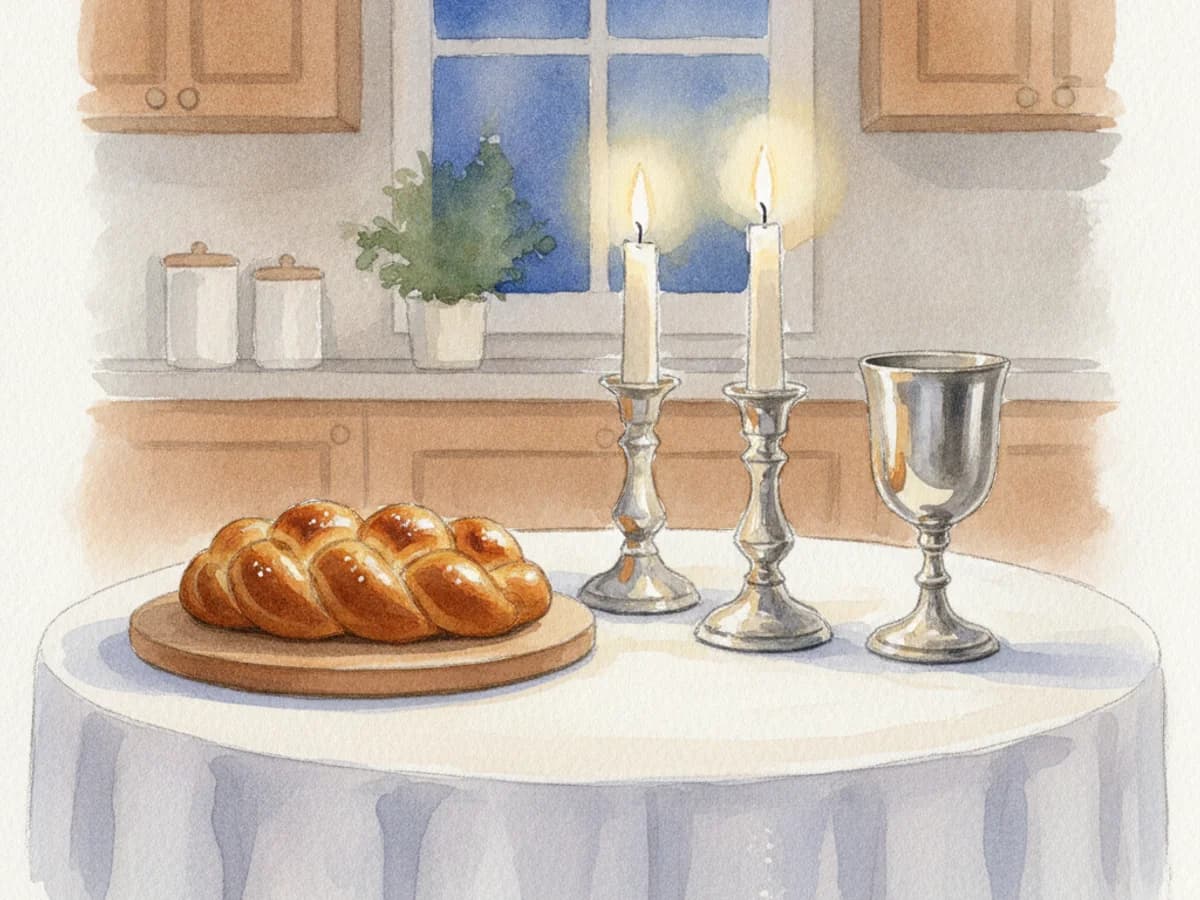
Traditional interpretation holds that both commandments were given simultaneously — an act only possible for God. This is why two candles are lit for Shabbat: one for zachor (remember) and one for shamor (observe).
The Spiritual Meaning of Shabbat
Shabbat is not simply a day off. It is a statement about the nature of time and human existence. By refraining from melachah (creative, transformative work), Jews affirm that they are not the masters of the world — God is. The Shabbat rest mirrors God's rest on the seventh day of creation (Genesis 2:1-3) and echoes the Israelites' liberation from Egyptian slavery, where they had no rest.
The Shabbat is called a bride in Jewish literature — prepared for, welcomed with joy, and reluctantly bid farewell. Friday afternoon is filled with the bustle of preparation; Friday evening is suffused with peace.
💡 Good to know
The concept of *menucha* (rest) in Jewish thought is not passive inactivity but active spiritual engagement. Shabbat rest allows for deeper prayer, study, and connection with family and community.
Welcoming Shabbat: Friday Evening
Candle Lighting
Shabbat begins with the lighting of at least two candles — traditionally done by the woman of the household (or any adult), approximately 18-20 minutes before sunset. The blessing is recited after lighting (a reversal of the usual order, since saying the blessing would formally begin Shabbat before the candles are lit):
Baruch atah Adonai, Eloheinu Melech haolam, asher kid'shanu b'mitzvotav v'tzivanu l'hadlik ner shel Shabbat.
"Blessed are You, Lord our God, Ruler of the universe, who has sanctified us with Your commandments and commanded us to kindle the Shabbat light."
Kabbalat Shabbat
Many synagogues hold a Kabbalat Shabbat ("Welcoming Shabbat") service on Friday evening, featuring the six psalms corresponding to the six days of the week, the poem Lecha Dodi ("Come, my beloved, to greet the bride"), and the Friday evening prayer service (Maariv).
Kiddush
Kiddush ("sanctification") is the blessing recited over wine, sanctifying the day. On Friday night, it includes a passage from Genesis (the creation of Shabbat), the blessing over wine (borei p'ri hagafen), and the blessing sanctifying the day. The wine is drunk after the blessing; grape juice is acceptable for those who don't drink wine.
HaMotzi — Blessing Over the Challah
After Kiddush and the ritual washing of hands (netilat yadayim), the challah is uncovered and the blessing is recited:
Baruch atah Adonai, Eloheinu Melech haolam, hamotzi lechem min ha'aretz.
"Blessed are You, Lord our God, Ruler of the universe, who brings forth bread from the earth."
The challah is sliced (or broken) and shared, often after a dip in salt — recalling the salt offered with Temple sacrifices.
Shabbat Dinner
Shabbat dinner is a joyful family meal. Traditional practices include Shalom Aleichem (welcoming the Shabbat angels), Eishet Chayil (Proverbs 31, honoring the woman of the house), blessings for children, and zemirot (Shabbat songs).
Saturday: The Full Shabbat Experience
Shabbat Morning Services
Shabbat morning services (Shacharit) are traditionally the longest and most elaborate of the week. They include the Pesukei d'Zimra (verses of praise), the Shema and its blessings, the Amidah, and the Torah reading. The Torah portion (parashah) follows an annual cycle, with the same portion read in Jewish communities worldwide.
The Torah Reading
Every Shabbat morning, a portion from the Torah is read, divided into seven aliyot (call-ups). After the Torah reading comes the Haftarah — a selection from the Prophets thematically connected to the Torah portion. For conversion candidates, following the weekly Torah cycle is excellent preparation for Jewish life.
Musaf
After the Torah service comes Musaf (additional service), corresponding to the additional sacrifice offered in the Temple on Shabbat. This service includes the Kedushah and prayers specific to Shabbat.
The 39 Melachot — Categories of Forbidden Work
The Torah prohibits melachah on Shabbat — more precisely, creative or transformative activity. The rabbis derived 39 categories of melachah from the types of work performed in building the Mishkan (Tabernacle).
| Category | Melachot Included |
|---|---|
| Agricultural (11) | Plowing, sowing, reaping, binding sheaves, threshing, winnowing, selecting, grinding, sifting, kneading, baking |
| Textile (13) | Shearing, washing, combing, dyeing, spinning, warping, making two loops, threading a loom, weaving, separating, tying, untying, sewing |
| Leather/writing (9) | Trapping, slaughtering, skinning, tanning, smoothing, marking out, cutting to shape, writing, erasing |
| Construction & fire (6) | Building, demolishing, kindling fire, extinguishing fire, the final hammer blow, carrying from private to public domain |
💡 Good to know
The 39 categories are called *avot melachah* (primary labors). Each has *toledot* (derivative prohibitions). Using electricity on Shabbat is a derivative prohibition, not one of the original 39 — which is why the debate about it is complex.
Modern Applications of Ancient Laws
Understanding how ancient categories apply to modern life requires rabbinic interpretation. For example:
- Writing (kotev) includes typing on keyboards and phones
- Building (boneh) includes assembling furniture or even completing electrical circuits
- Igniting fire (ma'avir) includes turning on lights, stoves, or car engines
- Carrying (hotza'ah) includes moving objects between private and public domains
Questions Conversion Candidates Commonly Explore
The category of melacha is often confusing because it is not simply a synonym for physical effort. Questions about lighting a flame, carrying, or using an eruv should be studied within the halakhic approach and local practice taught by the supervising rabbi.
Shabbat Observance Across Movements
| Practice | Orthodox | Conservative | Reform |
|---|---|---|---|
| Candle lighting | Required, 18–20 min before sunset | Required | Encouraged |
| Kiddush | Required, specific text | Required | Encouraged |
| 39 melachot | Strictly observed | Generally observed | Personal choice |
| Electricity | Forbidden | Generally forbidden | Personal choice |
| Driving to synagogue | Forbidden | Permitted in some communities | Permitted |
| Havdalah | Required | Required | Encouraged |
Conservative Movement and Driving
The Conservative movement's 1950 ruling allowing driving to synagogue on Shabbat was controversial but pragmatic. The Committee on Jewish Law and Standards reasoned that in suburban America, many Jews lived too far from synagogues to walk. They permitted driving only to and from synagogue, and only if no other transportation was available.
Creating Meaningful Shabbat Experiences
For Families with Children
Shabbat provides unique opportunities for family connection. Children often love the ritual aspects — lighting candles (with supervision), singing zemirot, and the special foods. Many families develop their own traditions within the traditional framework.
Rebecca, converting with her family in Denver, found that "Shabbat became the one time each week when we were truly present with each other — no phones, no screens, just conversation and connection. My eight-year-old now asks me on Wednesday if it's Shabbat yet."
For Singles and Young Professionals
Single adults often find Shabbat community through synagogue hospitality programs, havurah groups, or shared Shabbat dinners with friends. Many cities have young professional networks that organize regular Shabbat meals.
Shabbat Meals and Hospitality
The tradition of hachnasat orchim (welcoming guests) is especially strong on Shabbat. Inviting others — particularly those without family nearby or newcomers to Judaism — fulfills both the mitzvah of hospitality and creates community bonds.
Traditional Shabbat foods often have symbolic meaning:
- Fish — fertility and abundance (eyes never close, like God's watchfulness)
- Challah — shaped like a ladder (Jacob's ladder) or braided like hair (beauty of Shabbat)
- Wine — joy and celebration
- Salt — Temple sacrifices and preservation
Havdalah — The Closing Ceremony
Shabbat ends with Havdalah ("separation") — a brief, beautiful ceremony marking the transition back to ordinary time. It requires:
- Wine or grape juice — for the first blessing
- Fragrant spices (besamim) — smelled to revive the spirit as the Shabbat neshamah yeteirah (extra soul) departs
- A braided candle — lit for the blessing over fire, using a multi-wicked candle
The four blessings are over wine, spices, fire, and the separation itself (hamavdil bein kodesh l'chol — "who distinguishes between holy and ordinary"). After Havdalah, it is customary to sing Eliyahu HaNavi (Elijah the Prophet), associated with the hope for the Messiah.
The Emotional Impact of Havdalah
Many conversion candidates find Havdalah particularly moving. The ceremony acknowledges the sadness of Shabbat's end while preparing for the new week. The fragrant spices traditionally help the neshamah yeteirah (additional soul) depart gradually rather than abruptly.
For many learners, performing Havdalah with a community makes the transition from sacred time to the working week more concrete than reading about it alone. Ask your sponsoring rabbi or host which text and customs the community follows.
Special Shabbatot Throughout the Year
Certain Shabbatot have additional significance:
Shabbat Shalom vs. Shabbat Shuvah
Shabbat Shuvah (Shabbat of Return) falls between Rosh Hashanah and Yom Kippur. The Haftarah begins "Shuvah Yisrael" (Return, O Israel), and rabbis traditionally give their most important sermon of the year.
The Four Special Shabbatot
Before Passover, four special Shabbatot prepare the community:
- Shabbat Shekalim — remembering the Temple tax
- Shabbat Zachor — remembering Amalek (before Purim)
- Shabbat Parah — the red heifer purification ritual
- Shabbat HaChodesh — preparing for Passover
⚠️ Warning
Conversion candidates should attend synagogue regularly to experience these special Shabbatot. Each provides insights into Jewish calendar rhythms and community preparation for major holidays.
Shabbat and the Beit Din
Shabbat is one of the most important topics in any Beit Din interview. Be prepared to explain what Shabbat is and why it matters spiritually, describe the key rituals (candle lighting, Kiddush, challah, Havdalah), have a basic understanding of what melachah means, and speak about how you have incorporated Shabbat into your own life.
Common Beit Din Questions About Shabbat
- "How do you currently observe Shabbat?"
- "What does the concept of melachah mean to you?"
- "How has Shabbat observance changed your relationship with time?"
- "What challenges have you faced in Shabbat observance?"
- "How do you plan to maintain Shabbat observance after conversion?"
The best preparation is not just studying Shabbat — it is observing it. If you haven't yet made a practice of Friday night dinner and synagogue attendance, start now.
Frequently Asked Questions
What if I light candles late or forget one week?
You don't need to "make up" a missed Shabbat. Simply resume the following Friday. Shabbat is a gift and an aspiration — not a legalistic obligation that generates guilt when imperfectly kept during the conversion process.
Can I use my phone on Shabbat?
In traditional (Orthodox and most Conservative) halacha, using a smartphone is forbidden on Shabbat — it involves writing, creating electrical circuits, and carrying. In Reform practice, it is a personal choice. Discuss with your rabbi what is appropriate during your conversion journey.
What is an eruv?
An eruv is a symbolic boundary — often a string or wire enclosing a neighborhood — that halachically converts a public domain into a shared private domain. Within an eruv, carrying objects on Shabbat is permitted. Many Orthodox urban communities maintain an eruv.
Can I cook on Shabbat?
Traditional halacha forbids cooking (igniting fire, one of the 39 melachot). Food is prepared before Shabbat and kept warm on a blech (metal plate) or in a slow cooker set before Shabbat begins. Some modern Orthodox families use Shabbat-mode appliances that operate without electronic controls.
What about medical emergencies on Shabbat?
Pikuach nefesh (saving life) overrides virtually all Shabbat prohibitions. Not only is medical treatment permitted — it is required. Emergency responders, doctors, and others saving lives are fulfilling a mitzvah, not violating Shabbat.
How do I handle work obligations that conflict with Shabbat?
This varies greatly by community and movement. Many employers are legally required to accommodate religious observance. Conversion candidates should discuss practical strategies with their rabbis and mentors who have navigated similar challenges.
Building Your Shabbat Practice
Start Small and Build Gradually
Shabbat observance need not be all-or-nothing. Many conversion candidates begin with Friday night candles and dinner, then gradually add morning services, restrictions on electronics, or other practices. The goal is sustainable growth, not perfection.
Find Your Community
Shabbat is fundamentally communal. Whether through synagogue attendance, shared meals, or study groups, connecting with others enhances both the joy and the educational value of Shabbat observance.
Resources for Deepening Practice
- Shabbat and Holiday Prayer Books: Each movement publishes siddurim with Shabbat prayers and explanations
- Shabbat Cookbooks: Collections of recipes designed for Shabbat preparation and observance
- Community Classes: Many synagogues offer "Shabbat 101" classes for newcomers
- Online Resources: Apps for Shabbat times, benching (grace after meals), and zemirot
Deepen Your Preparation
The study sheet on Shabbat goes deeper into the halachic details. For the full context of Shabbat within Jewish holidays, see the Jewish holidays guide. For help preparing your Beit Din interview, practice Shabbat-related questions in the quiz.
Understanding Shabbat intellectually is important, but experiencing it transforms that knowledge into wisdom. As you prepare for conversion, let Shabbat become not just a topic of study but a weekly rhythm that shapes your Jewish journey.
Shabbat observance varies across Jewish movements and individual families. This guide presents mainstream traditional practices. Consult your rabbi for guidance specific to your community.