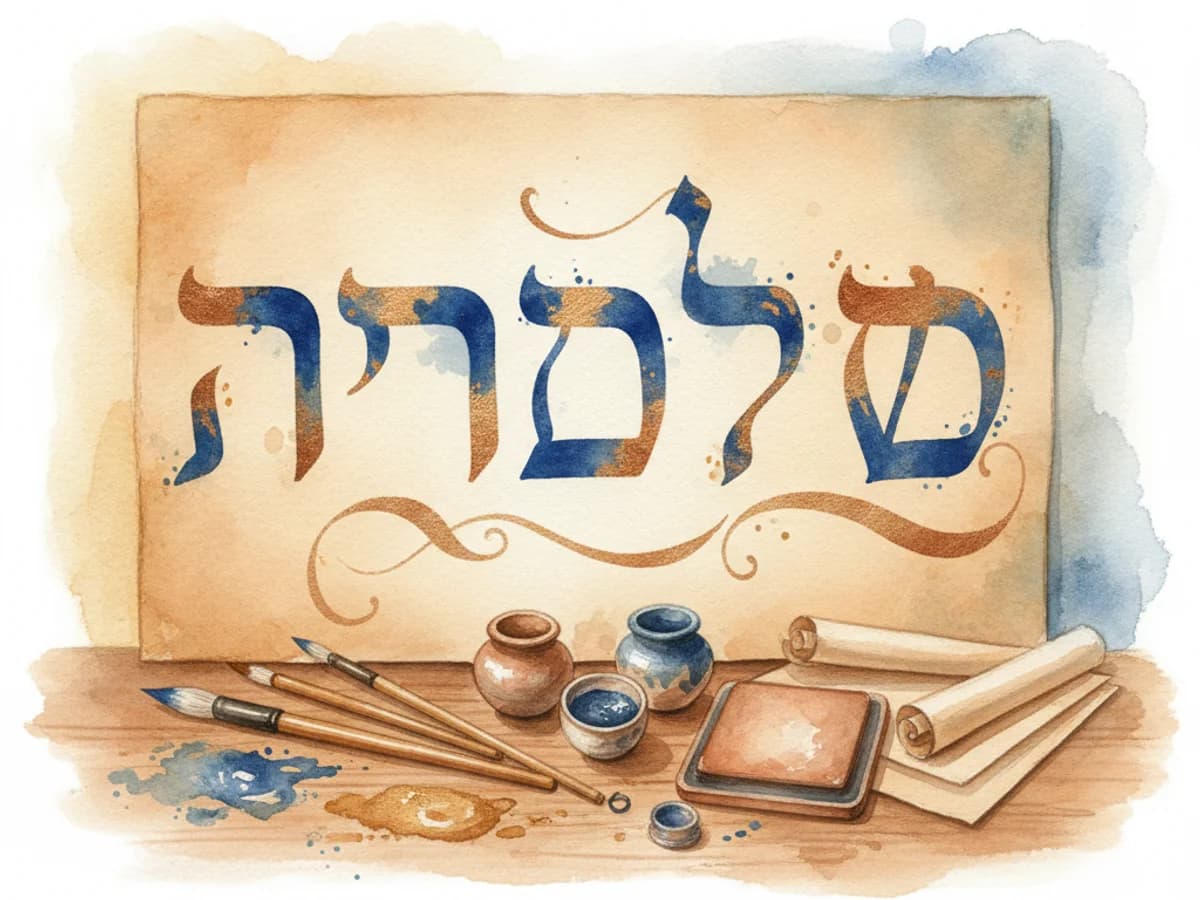
Learning the Hebrew alphabet is one of the most fundamental skills you'll need during your Jewish conversion journey. While it may seem daunting at first, mastering the 22 Hebrew letters opens the door to reading prayers, participating in services, and connecting deeply with Jewish texts and tradition.
Most conversion candidates can achieve basic Hebrew reading proficiency within 3-6 months of consistent practice. The key lies in understanding that Hebrew reading differs significantly from English - you'll read from right to left, encounter letters that change form depending on their position, and initially work without vowel points in many contexts.
Your conversion program will likely require you to demonstrate Hebrew reading skills before your Beit Din, making this an essential milestone in your journey. Whether you're preparing for Orthodox, Conservative, or Reform conversion, Hebrew literacy remains a cornerstone of Jewish learning and practice.
📌 Key Takeaways
- Most conversion candidates master basic Hebrew reading in 3-6 months
- Start with letter recognition before moving to vowel systems
- Practice 15-20 minutes daily for optimal retention
- Focus on prayer book Hebrew rather than modern conversational Hebrew
Understanding the Hebrew Writing System
The Hebrew alphabet consists of 22 consonantal letters, each carrying both a sound and numerical value. Unlike English, Hebrew reads from right to left, and most letters connect to form words without spaces between individual characters.
Five letters have special final forms (ך, ם, ן, ף, ץ) that appear only at the end of words. These final letters often confuse beginners, but they follow consistent patterns that become intuitive with practice.
Hebrew traditionally uses only consonants, with vowels indicated by small marks called nikkud placed above, below, or within letters. However, most adult Hebrew texts, including prayer books, omit these vowel markings, requiring readers to recognize words by their consonantal structure.
Phase 1: Letter Recognition and Basic Sounds
Begin your Hebrew learning journey by focusing exclusively on letter recognition and basic pronunciation. Spend your first 2-4 weeks mastering the visual appearance and primary sounds of each letter before introducing complications like vowels or final forms.
Create flashcards with the Hebrew letter on one side and its transliteration on the other. Practice writing each letter multiple times, paying attention to proper stroke order and proportions. Hebrew letters have specific shapes that change meaning when altered, making accurate formation crucial.
💡 Good to know
Many Hebrew letters look similar to beginners (ב/כ, ד/ר, ה/ח). Focus on distinguishing features like the small gap in ב or the pointed bottom of ד to avoid confusion.
Start with the most common letters first: א, ב, ג, ד, ה, ו, ז, ח, ט, י. These appear frequently in Jewish prayers and will give you the foundation to recognize familiar words quickly.
Practice identifying letters in different fonts and handwriting styles. Prayer books often use distinctive Hebrew fonts that differ from standard print, and you'll encounter various styles during your conversion studies.
Learning the Vowel System (Nikkud)
Once you can reliably identify all 22 letters, introduce the Hebrew vowel system gradually. The nikkud consists of dots and lines positioned around letters to indicate vowel sounds, transforming consonantal skeletons into fully pronounced words.
Focus on the five primary vowel sounds first: קָמַץ (kamatz - "ah"), פַּתַח (patach - "ah"), צֵירֵי (tzeirei - "ei"), חִירִיק (chirik - "i"), and שֻׁרוּק (shuruk - "u"). These vowels appear most frequently and will enable you to read basic Hebrew texts.
| Vowel Name | Symbol | Sound | Example |
|---|---|---|---|
| Kamatz | ָ | "ah" as in father | בָּא (ba - came) |
| Patach | ַ | "ah" as in cat | כַּת (cat - sect) |
| Tzeirei | ֵ | "ei" as in hey | בֵּית (beit - house) |
| Chirik | ִ | "i" as in machine | גִּיל (gil - joy) |
| Shuruk | וּ | "u" as in tune | בּוּל (bul - stamp) |
Practice reading simple voweled texts before attempting prayer book Hebrew. Many beginner Hebrew readers benefit from using children's Hebrew books or voweled versions of prayers during this learning phase.
Building Reading Fluency
Reading fluency develops through consistent practice with increasingly complex texts. Start with individual words, progress to short phrases, and gradually work toward complete sentences and paragraphs.
Focus on accuracy over speed initially. Hebrew reading errors often change meaning dramatically, so precise letter and vowel recognition takes precedence over rapid reading. Speed naturally increases as letter patterns become familiar.
Practice with familiar prayers from your conversion classes like the Shema or Kaddish. These texts appear frequently in Jewish worship, making them practical choices for skill development.
Read aloud consistently, even during private study. Hebrew pronunciation involves specific mouth positions and breathing patterns that develop only through vocalization practice. Silent reading doesn't build the muscle memory needed for prayer participation.
Essential Practice Tools and Resources
Invest in quality Hebrew learning materials designed specifically for adult learners. Children's Hebrew programs often focus on modern Hebrew vocabulary irrelevant to Jewish prayer, while adult-oriented resources emphasize liturgical and biblical Hebrew more relevant to conversion studies.
⚠️ Warning
Avoid relying exclusively on transliteration during Hebrew learning. While transliterated prayers help initially, they prevent you from developing true Hebrew reading skills essential for independent Jewish practice.
Digital tools like Hebrew reading apps provide convenient practice opportunities, but complement rather than replace traditional methods. Apps excel at letter drill and basic vocabulary but often lack the contextual learning needed for prayer book navigation.
Consider hiring a Hebrew tutor for personalized instruction, especially if you struggle with self-directed learning. Many Jewish communities offer Hebrew reading courses specifically for conversion candidates, providing peer support and structured progression.
Purchase a Hebrew-English prayer book (siddur) early in your learning process. Familiarity with prayer book layout, Hebrew fonts, and common liturgical phrases accelerates practical reading skill development more than generic Hebrew textbooks.
Timeline and Milestones
Month 1-2 represents the foundational phase, focusing on letter recognition and basic sounds. Aim to identify all 22 letters reliably and write them from memory. Practice sessions should last 15-20 minutes daily, emphasizing consistency over duration.
Month 3-4 introduces vowel systems and simple word reading. Begin practicing with voweled Hebrew texts, focusing on accuracy and proper pronunciation. Many students can read basic Hebrew words confidently by the end of this phase.
Month 5-6 develops fluency with prayer book Hebrew and longer text passages. Practice reading familiar prayers without vowel markings, relying on word recognition and context clues. Most conversion candidates reach sufficient proficiency for Beit Din participation during this period.
Advanced students may continue Hebrew study throughout their conversion process, developing skills in biblical Hebrew, commentary reading, or modern Hebrew conversation. However, basic prayer reading proficiency satisfies most denominational requirements.
Common Challenges and Solutions
Letter confusion affects nearly all Hebrew beginners, particularly with similar-looking characters. Create memory devices linking letter shapes to familiar objects or sounds. For example, the letter ג (gimel) resembles a foot, helping you remember its "g" sound.
Right-to-left reading requires conscious practice to overcome ingrained left-to-right habits. Cover Hebrew text with paper, revealing one word at a time from right to left until the pattern becomes natural.
Vowel-less reading intimidates many students, but develops naturally through pattern recognition. Start by reading voweled versions of prayers, then gradually transition to standard prayer book format as word shapes become familiar.
Integration with Conversion Studies
Connect Hebrew learning directly to your broader conversion education rather than treating it as separate skill development. Use Hebrew terms when studying Jewish concepts, read original Hebrew phrases in Jewish texts, and participate in Hebrew portions of services whenever possible.
Your rabbi or conversion teacher can provide guidance on prioritizing specific Hebrew skills relevant to your denomination and community. Orthodox conversions typically require more extensive Hebrew proficiency than Reform programs, affecting your study timeline and depth.
Practice Hebrew reading during Shabbat observance and holiday celebrations, integrating language learning with religious practice. This contextual approach reinforces both Hebrew skills and Jewish knowledge simultaneously.
Frequently Asked Questions
How much Hebrew do I need to know for conversion?
Requirements vary by denomination, but most programs expect basic prayer reading ability. You should be able to read Hebrew aloud with reasonable accuracy, even if you don't understand every word's meaning. Orthodox conversions typically require more extensive Hebrew knowledge than Conservative or Reform programs.
Should I learn modern Hebrew or biblical Hebrew?
Focus on prayer book Hebrew for conversion purposes. This liturgical Hebrew bridges biblical and modern forms while emphasizing the texts you'll encounter in Jewish worship. Modern conversational Hebrew, while valuable, isn't typically required for conversion completion.
Can I convert without learning Hebrew?
While some Reform communities may accommodate converts with minimal Hebrew knowledge, most Jewish movements expect basic Hebrew reading skills. Hebrew literacy demonstrates commitment to Jewish learning and enables meaningful participation in community worship and study.
How long should I practice Hebrew daily?
Fifteen to twenty minutes of daily practice proves more effective than longer, infrequent sessions. Consistent daily exposure helps build the pattern recognition and muscle memory essential for Hebrew reading fluency. Quality and consistency matter more than duration.
What if I'm struggling with Hebrew learning?
Consider working with a Hebrew tutor, joining a conversion candidate study group, or exploring different learning methods that match your style. Some students benefit from audio-focused approaches, while others prefer visual or kinesthetic methods. Don't hesitate to seek additional support from your converting rabbi or Jewish community.
Conclusion
Mastering the Hebrew alphabet represents a crucial milestone in your Jewish conversion journey, opening doors to deeper engagement with Jewish prayer, study, and community life. While the learning curve can seem steep initially, consistent daily practice and systematic progression through letter recognition, vowel systems, and reading fluency will build the skills you need for meaningful Jewish participation.
Remember that Hebrew learning extends far beyond conversion requirements - it's an investment in your lifelong Jewish identity and practice. The effort you invest now in building strong Hebrew foundations will pay dividends throughout your Jewish journey, enabling you to engage more fully with Jewish texts, prayers, and traditions.
Ready to take the next step in your conversion journey? Explore our comprehensive study platform designed specifically for Jewish conversion candidates, featuring Hebrew reading exercises, prayer practice, and expert guidance to support your learning every step of the way.